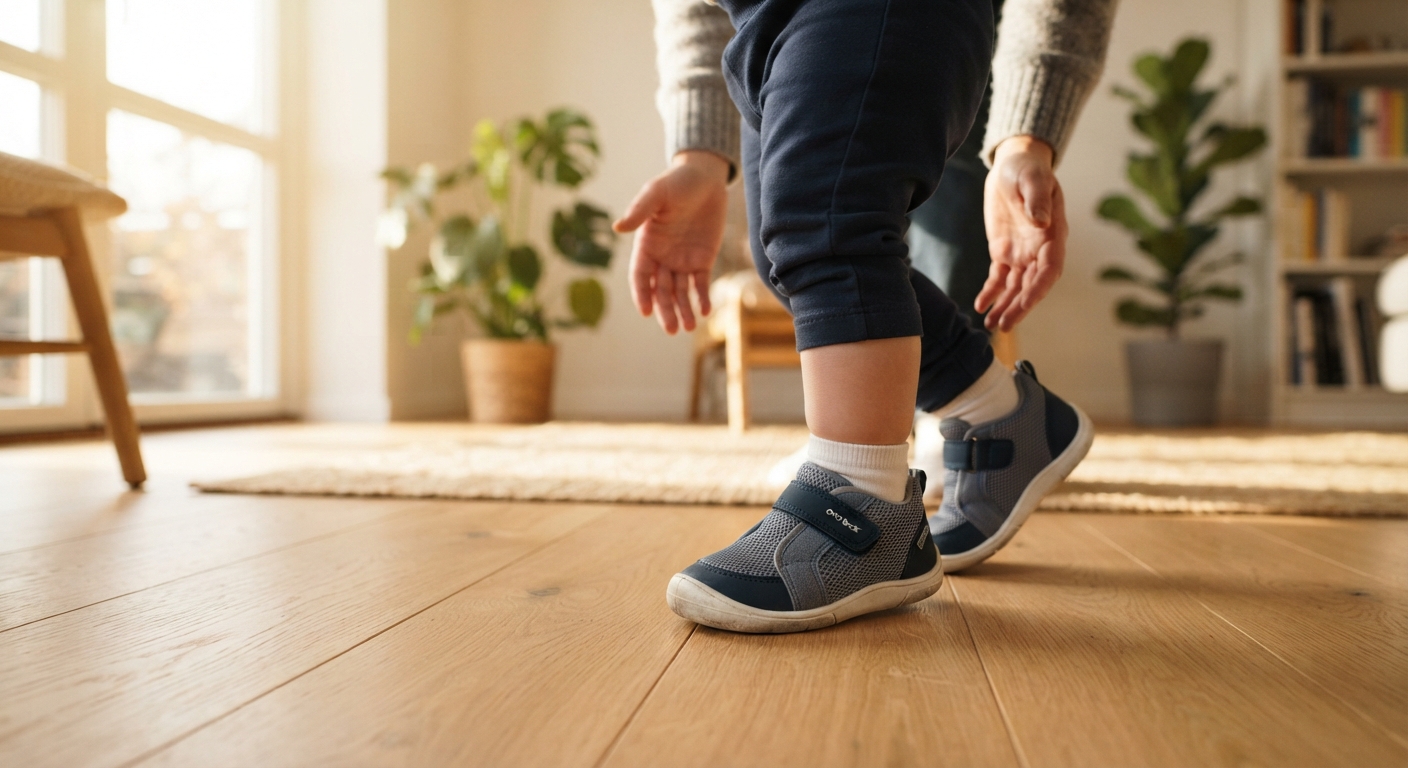
Seeing those tiny toes angle inward can spark a thousand questions, especially during those first wobbly steps. Most of the time, this “in-toeing” look is part of normal development, not a crisis. Babies’ bones are soft, their hips are rotating, and their gait is still learning the script. With a little context and patience, that inward angle usually straightens out as growth takes the lead.
What “pigeon-toed” really means for babies-and why it often fixes itself
“Pigeon-toed,” or in-toeing, describes feet that point inward when a child stands or walks, and it commonly shows up in infancy and early childhood. In many cases, it reflects how the bones and joints are oriented while the body still has plenty of growing to do. Because early gait is a work in progress, an inward angle alone rarely signals a serious problem. What matters more is comfort, symmetry, and how things trend over time rather than a single snapshot.
Three usual suspects sit behind in-toeing: metatarsus adductus (a curved forefoot in infants), internal tibial torsion (the shinbone turning inward, common in toddlers), and femoral anteversion (the thighbone rotating inward, often noticed in preschoolers). Each of these tends to follow a predictable arc of improvement as bones remodel and muscles strengthen. Parents often notice the angle more during fast walking or running, when coordination hasn’t fully caught up. As balance, strength, and coordination sharpen, the feet typically swing closer to straight ahead.
Day-to-day, in-toeing can look more dramatic after long rides in a car seat or stroller, where legs rest turned in. Likewise, kids love “W-sitting,” which can exaggerate the inward angle but doesn’t automatically cause harm in otherwise healthy children. It helps to watch trends across months, not minutes, because growth spurts can cause quick shifts in how the feet point. Photographs or short videos taken from behind can give a clear before-and-after view over time.
Common causes by age: from tiny toes to growing bones-what’s normal when
In babies under age one, metatarsus adductus often takes the stage, with the front of the foot curving inward like a little comma. Many flexible cases unwind naturally as the child starts standing, cruising, and walking. Gentle stretching during diaper changes and lots of barefoot floor time can encourage the forefoot to relax into a straighter line. Most flexible curves improve in the first 6-12 months of standing activity.
In toddlers, internal tibial torsion is a classic reason for in-toeing, and it often looks most obvious when they run. As they grow, the shinbone gradually rotates outward to a more neutral position. This slow-and-steady remodeling typically moves in the right direction without special shoes or braces. Tripping may happen when energy is high and balance is still catching up, but that tends to fade with practice.
Pro tip
Preschoolers sometimes show femoral anteversion, where the inward rotation comes from the hips rather than the feet. It can make cross-legged sitting feel awkward and W-sitting feel easy, which is why kids naturally pick it. Over elementary school years, hip rotation commonly shifts outward, and the in-toeing fades noticeably by ages 8-10. A simple home check: look from behind during a relaxed walk; if comfort is normal and the pattern is symmetric, it’s usually on a healthy track.
When to relax-and when to check in: signs that matter
Most in-toeing lives in the “keep watching” zone, but a few signs deserve extra attention. Red flags include consistent pain, limping, a sudden change after an injury, or one leg looking very different from the other. Growth differences or neurological concerns can also add context, especially if other movement milestones feel delayed. In short, comfort and symmetry are the big guideposts, not just the angle itself.
Notice how the child moves during play, not just when posing for a photo. If running, jumping, and climbing look fun and fuss-free, the body is usually doing its natural remodeling in the background. Frequent falls can look scary, but in early walkers, tripping is often about coordination, not just foot angle. Over months, practice normally smooths out those stumbles.
It also helps to factor in family traits because body alignment often runs in the family. Below is a handy checklist of moments that make a quick professional glance a smart move.
- Pain, swelling, or limping that lasts more than a few days.
- A sudden, one-sided change after a fall or twist.
- Worsening in-toeing past age 6-7 instead of gradual improvement.
- Marked asymmetry between right and left foot or leg.
- Delays in major motor milestones alongside in-toeing.
Practical home tips to support natural alignment (that kids actually enjoy)
Floor time is gold: let those feet explore different textures barefoot when safe, because toes, arches, and ankles learn by feeling the ground. Loose, flexible footwear that bends at the forefoot helps the foot act like a spring rather than a stiff plank. Stiff, heavy shoes may look supportive, but they can muffle the signals feet use to balance and align. The goal is comfort and play, not rigid correction.
Make play the therapy by sprinkling in games that build hip and core strength. Scooting through obstacle courses, tiptoeing along tape “balance beams,” and animal walks all feed alignment without fuss. Short, frequent bursts of movement beat marathon sessions, especially for busy toddlers with short attention spans. Fun is the hook that keeps practice consistent.
Parents sometimes search for answers online and bump into a maze of options and opinions. For a clear primer written in plain language, this guide to pigeon toed in bebies breaks down causes, timelines, and what improvement typically looks like. Here are a few simple daily boosters to make progress feel natural and low-pressure.
- Lots of barefoot time on safe, varied surfaces to wake up foot sensors.
- Gentle forefoot stretches during diaper changes if the front of the foot looks curved.
- Games that encourage feet to point forward, like scooter rides or chalk “runways.”
- Flexible, lightweight shoes only when needed outdoors; skip rigid inserts unless advised.
Latest insights from pediatric research on in-toeing: what studies really say
Modern pediatric studies keep returning to a reassuring theme: most in-toeing in healthy children improves with time, growth, and play. The main drivers-metatarsus adductus, internal tibial torsion, and femoral anteversion-follow age-specific arcs that usually bend toward neutral. Shoes, braces, and special gadgets rarely speed the natural timeline in otherwise typical cases, while comfort-focused activity tends to help coordination catch up.
Families often ask for concrete numbers to make the wait feel less mysterious, and recent summaries offer helpful ballpark figures. Improvement is common across early childhood, with the majority trending better year by year. Here’s a quick, at-a-glance snapshot that pulls together what clinicians commonly see in practice and literature.
| Pattern | Typical age noticed | Main cause | Natural resolution likelihood | Usual resolution window | Notes |
|---|---|---|---|---|---|
| Metatarsus adductus | Birth to 12 months | Curved forefoot | 80-95% (flexible cases) | By 12-24 months of walking | Gentle stretching often helps; rigid cases may need evaluation. |
| Internal tibial torsion | 1-3 years | Shinbone turned inward | 85-95% | Gradual change through ages 4-7 | Most noticeable when running; typically fades without braces. |
| Femoral anteversion | 3-7 years | Thighbone rotated inward | 80-90% | Improves by ages 8-10, sometimes into early teens | Kids may prefer W-sitting; comfort usually remains normal. |
Bottom line: the data trend is optimistic-the vast majority of children see steady, natural improvement with growth and everyday play. A small minority with stiff deformities, pain, or neurological conditions may benefit from targeted care. For everyone else, time, movement, and watchful reassurance remain the proven recipe. Keeping notes or short videos every few months can make progress easier to spot.
Wrapping up: baby pigeon-toed worries, made simple
Big picture, most baby and toddler in-toeing rides a predictable arc from “noticeable” to “nearly gone” as bones rotate and muscles coordinate. Comfort, symmetry, and steady improvement over months matter more than perfect alignment on any single day. Gentle play, flexible shoes, and patience usually do the heavy lifting, while red flags like pain or sudden one-sided changes deserve a closer look. With those guideposts, parents can relax into the process and let growth do its job.
For anyone still feeling uneasy, it helps to zoom out and compare today’s gait with a clip from three or six months ago. Most families are surprised by how much alignment, stride length, and balance improve without any special gear. When in doubt, a quick professional opinion can confirm the trend and offer peace of mind. That blend of reassurance and smart monitoring keeps kids active, confident, and moving forward-literally.
So if “pigeon-toed” shows up in photos or at the playground, think of it as a chapter, not the whole story. Most little legs rewrite that chapter with each growth spurt and every game of tag. A few simple habits-barefoot play, flexible shoes, and fun strength builders-nudge progress along without turning childhood into a treatment plan. And that’s a win for both developing bodies and calmer hearts.